AI in Today's News: From Brain-Reading Tech to AI-Enhanced Browsing
Today’s AI news is a mixed bag, showcasing both the incredible potential and the potential pitfalls of increasingly sophisticated artificial intelligence. From mind-reading tech that can decipher thoughts to AI-powered browser features raising privacy concerns, it’s clear that AI continues to rapidly evolve and impact our lives in profound ways.

One of the most fascinating developments comes from the realm of neuroscience, where researchers have developed a “‘mind-captioning’ technique” that can interpret human thoughts from brain scans. According to Medical Xpress, this technology goes beyond simply identifying single words associated with an object or action. Instead, it aims to match brain signals to complex thoughts and descriptions. While still in its early stages, this breakthrough could have huge implications for understanding consciousness, treating neurological disorders, and even enabling new forms of communication for people with disabilities.
AI Powers Up: Layoffs, Leaks, and Maps Get Smart

Today’s AI news is a mixed bag, revealing both the opportunities and challenges that come with the rapid integration of artificial intelligence into various sectors. From job losses due to automation to exciting upgrades in everyday apps, AI continues to reshape our world in profound ways.
The first major headline comes from the gaming industry, where Square Enix is reportedly laying off over 100 employees in the UK and an unknown number in the US. This move is tied to the company’s goal of automating 70% of its QA and debugging work with AI by 2027. While AI promises increased efficiency, this news serves as a stark reminder of the potential human cost. It raises important questions about the future of work and the need for proactive strategies to support those displaced by automation.
AI in the Headlines: From Space-Based Data Centers to TikTok Trickery
Today’s AI news is a mixed bag, showcasing both the ambitious potential and the growing ethical considerations surrounding the technology. We’re seeing AI push the boundaries of what’s possible, from powering next-gen navigation to potentially relocating data centers to space. But we’re also getting a stark reminder of AI’s capacity to deceive.

First up, the truly mind-bending: Ars Technica reports that Google engineers are seriously considering building data centers in orbit to meet AI’s ever-growing demand for power. The idea is that space-based solar power could provide a clean and efficient energy source, unconstrained by terrestrial limitations. It sounds like something straight out of science fiction, but the article suggests Google believes the technology is already within reach. It’s a bold vision that highlights just how resource-intensive AI development is becoming.
AI Ringing in the News: Google's AI Mode, Whisper Rings, and Ethical Datasets
Today’s AI news is a mixed bag of accessibility, innovation, and ethics. From Google expanding its AI Mode to a new wearable device designed for capturing voice notes with a whisper, and a new dataset that implements best practices for consent, privacy, compensation, safety, diversity and utility, it’s clear that AI is becoming more ingrained in our lives.

Google is expanding its “AI Mode” to Chrome on Android and iOS, aiming to make search more “agentic” by adding new floating controls on Android. (9to5Google) This hints at a future where AI anticipates our needs and proactively assists us, potentially streamlining everything from booking appointments to gathering information. The push for more agentic features in AI search could drastically change how we interact with the internet, raising questions about user agency and data privacy.
AI Roundup: Microsoft Enters the Image Generation Arena, OpenAI's Browser Gets Selective, and Alexa Evolves
Today’s AI news showcases both the expanding capabilities and the growing pains of artificial intelligence. Microsoft has thrown its hat into the image generation ring, while OpenAI’s new browser is raising eyebrows with its browsing habits. Amazon is also upping its AI game with Alexa in its Music app.

First up, Microsoft has officially released its first in-house AI image generator, MAI-Image-1. This move signals Microsoft’s intent to compete directly with established players like DALL-E and Midjourney. While details are still emerging, the arrival of MAI-Image-1 is sure to stir up the already competitive AI image generation landscape. Note that the model is not yet available in the EU.
AI in the News: From Microsoft's Skepticism to Smarter Google Translate
Today’s AI news covers a range of topics, from debates over the very nature of AI to practical improvements in everyday tools. Microsoft’s AI chief has some strong opinions on where the field should focus, while Google is making its translation services more flexible. Let’s dive in.

First up, Mustafa Suleyman, head of Microsoft’s AI division, has made waves by declaring the pursuit of conscious AI an “absurd” waste of time. According to Gizmodo’s report, Suleyman believes that AI developers should focus on more practical applications. This stance reflects a growing debate within the AI community about the ethics and feasibility of creating machines that possess consciousness. Is it a worthwhile goal, or are we better off focusing on AI that solves real-world problems?
AI Brains Mimicked, ChatGPT's News Preferences, and More
Today in AI, we’re seeing a fascinating blend of neuroscience-inspired innovation and the ever-present questions of bias and control in large language models. From researchers mimicking the human brain to improve AI performance, to ChatGPT seemingly avoiding certain news sources, here’s a look at the most noteworthy AI stories of the day.
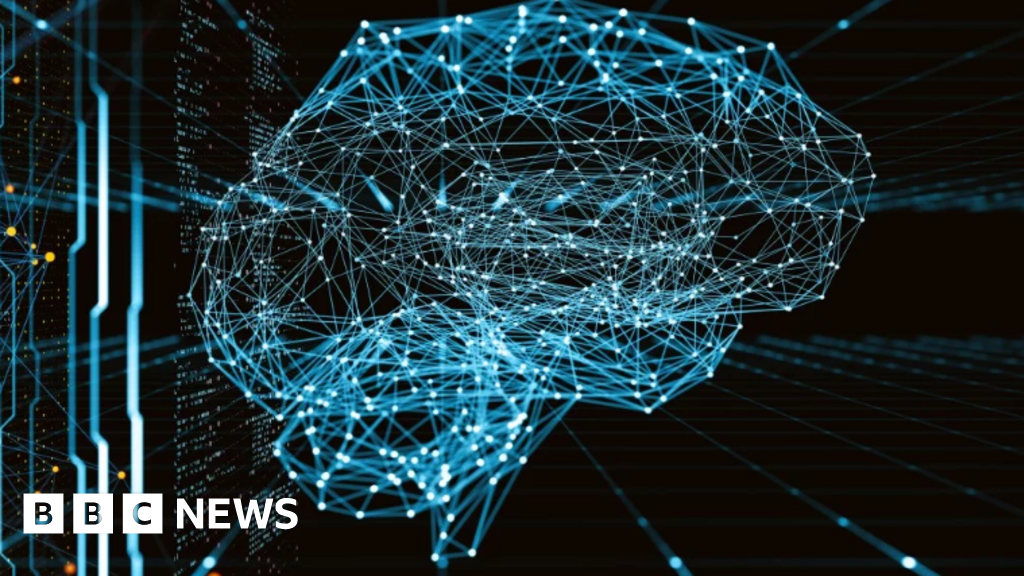
Researchers at the University of Surrey have made a significant stride in AI development by mimicking the wiring of the human brain. According to the BBC, this new method rethinks how AI systems are wired at their most fundamental level, potentially leading to more efficient and powerful AI. It’s exciting to see AI drawing inspiration from the very thing it aims to replicate – human intelligence. University of Surrey researchers mimic brain wiring to improve AI
AI's Adventures in Robotics, Comedy, and Security: A Daily Roundup
Today’s AI news is a fascinating mix of whimsy and worry, showcasing both the creative potential and emerging vulnerabilities of increasingly sophisticated systems. From AI-powered robots channeling comedic legends to the discovery of new methods for hacking AI browsers, it’s a day that underscores the rapid evolution—and the ever-present need for caution—in the world of artificial intelligence.

AI in the Headlines: Sora's Premium Tier, Adobe's AI Video Editor, and AI Browser Vulnerabilities

[Source: nbcnews.com](https://www.nbcnews.com/tech/tech-news/ai-browsers-comet-openai-hacked-atlas-chatgpt-rcna235980)
Today's AI news is a mix of content creation advancements and sobering reminders of the technology's inherent risks. From OpenAI's evolving business model to Adobe's innovative editing tools and the security concerns surrounding AI browsers, here's a digest of what's making waves in the world of artificial intelligence.
[OpenAI is now offering Sora users the option to pay for extra AI video generations](https://mashable.com/article/openai-sora-pay-make-more-ai-videos). This move suggests a growing demand for AI-generated content and a potential shift toward a more commercially-driven model for AI services. While users initially received 30 free generations per day, those craving more can now open their wallets, signaling a belief in the value and utility of Sora's AI video capabilities.
Meanwhile, [Adobe has unveiled an experimental AI tool capable of editing entire videos using a single frame](https://www.theverge.com/news/811602/adobe-max-2025-sneaks-projects). This showcases the rapid evolution of AI in creative fields, potentially revolutionizing video editing workflows. Dubbed "Project Frame Forward", this tool represents a leap toward more intuitive and accessible video manipulation, lowering the barrier to entry for aspiring filmmakers and content creators.
However, the rise of AI isn't without its challenges. [NBC News reports that AI browsers are already being targeted by hackers](https://www.nbcnews.com/tech/tech-news/ai-browsers-comet-openai-hacked-atlas-chatgpt-rcna235980). These vulnerabilities stem from the browsers' reliance on prompts, which can be manipulated through hidden code embedded in websites. This revelation serves as a crucial reminder of the security risks associated with AI and the importance of robust safeguards as these technologies become more integrated into our daily lives. It seems the race to innovate must be tempered with a commitment to security.
In a related story, [Nature reports that AI chatbots are experiencing "brain rot" from too much low-quality social media data](https://www.nature.com/articles/d41586-025-03542-2). Large language models trained on this type of data are skipping steps in their reasoning processes and are thus less reliable.
Finally, in a slightly more positive development, [Tim Cook says that more AIs are coming to Apple Intelligence](https://www.theverge.com/news/810735/tim-cook-ai-apple-intelligence-integrations). Cook told CNBC that Apple intends to integrate with more people over time.
Today's AI news paints a complex picture: incredible progress in content creation, but also significant challenges in security and data quality. As AI becomes more pervasive, these are the issues that will shape its trajectory and impact on society.
AI Takes Center Stage: Browsers Under Fire, Sora Gets Smarter, and YouTube Gets Clearer
Artificial intelligence continues to weave its way into every corner of our digital lives, and today’s news is no exception. We’re seeing advancements in video generation, warnings about AI browser security, and improvements to how we consume online content. Let’s dive into the AI stories that made headlines today.

First up, OpenAI is making waves again with its Sora app. According to The Verge, Sora now allows users to create reusable “characters” and stitch video clips together, opening up exciting possibilities for longer, multi-scene AI-generated videos. This evolution allows for more consistent narratives and character development within the AI-generated space, pushing the boundaries of what’s possible with video synthesis.